Thursday, 27 October 2016

Infusing Indigenous Perspectives into Mathematics and Science

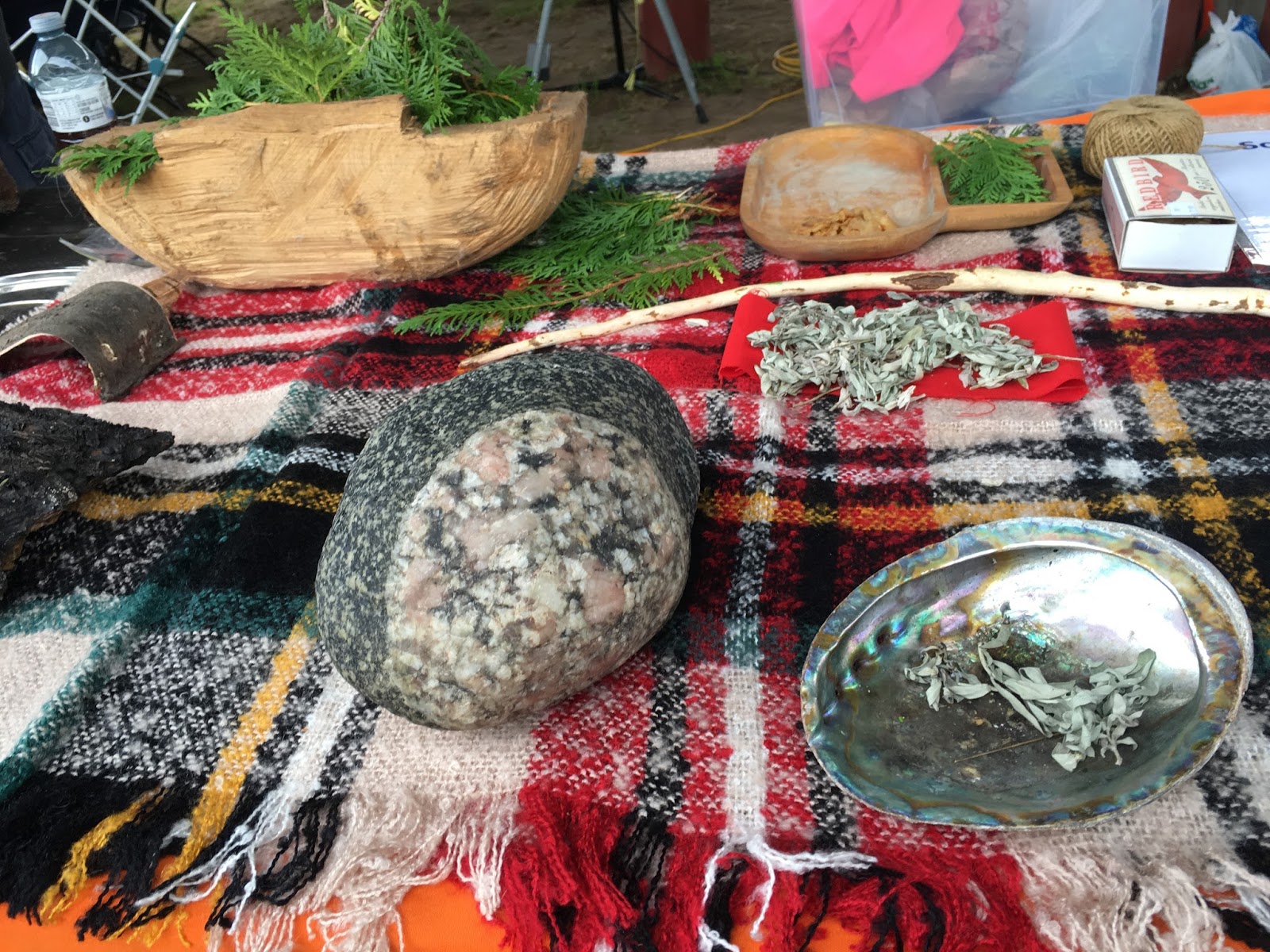
Thanks to ETFO, Joanne and I were able to travel to Toronto to attend a conference on Infusing Aboriginal Perspectives into Science and Mathematics.  Over the course of two days, we had the opportunity to learn from other educators, try science and math activities, and review resources to help bring Indigenous culture into our classrooms.

Beading is a great way to teach patterning and algebra to elementary students.  It was an engaging, yet sometimes frustrating, activity with opportunities for rich learning.  Planning out the design in advance proved challenging for many of the teachers at the conference.  I personally went through three planning sheets before I finally decided on my pattern!

We also explored some flight concepts, through the design of a blunt-tipped arrow.  I'm sure anyone who has taught grade 6 in Ontario has done some hands on building of paper planes...this activity was a way to explore Indigenous culture and cover the Science and Tech curriculum at the same time!  I think one way to make this experience more authentic would be to include an exploration of traditional materials and tools for arrow building (with safety in mind, of course).  What type of wood/branches would work best? What tools would Indigenous people have used to shape their arrows? What types of feathers would they have used, depending on where they lived?  The learning potential is unlimited!

Overall, it was a fun experience...Thanks, ETFO!

Friday, 7 October 2016

Comprehension and Collaboration

In an effort to meet curriculum expectations, encourage curiosity and questions, and include everyone I want to incorporate inquiry circles into the classroom.  Inquiry circles help students learn about the world and provide them with some choice in the matter.  

To encourage students to become thoughtful readers, thinkers, communicators, and researchers, I am teaching specific lessons in comprehension, collaboration, and inquiry.  The lessons were from Comprehension and Collaboration: Inquiry Circles for Curiosity, Engagement, and Understanding by Stephanie Harvey and Harvey "Smokey" Daniels.


Examples of Comprehension Lessons:

  • Activate and Build Background Knowledge
  • Listen to Your Inner Voice
  • Think and Wonder About Images
  • Use TExt and Visual Features to Gain Information
  • Signal Words and Phrases and Their Purposes
Examples of Collaboration Lessons:
  • Turn and Talk
  • Active Listening in Pairs
  • Creating Group Ground Rules
  • Making and Using a Work Plan
  • Where Do You Stand?
Examples of Inquiry Lessons:
  • Model with Research Alouds
  • Install a Wonder Wall Question Board
  • Create Research Notebooks
  • Dealing with Digital Distractions
Harvey and Daniels emphasize that the lessons should be taught repeatedly at every grade level and different subject areas.  


Students practice the collaboration lesson, Turn and Talk.


Wednesday, 5 October 2016

Inquiry in the 7/8 Classroom

In September, I posed the question, "Who do you think is the greatest Canadian, and why?"  Students explored notable Canadians and presented the information in a variety of ways.  It was our first foray into "Inquiry" or "Project-based" Learning.  What a learning experience it was!

Our first step was to look at Digital Citizenship.  Students investigated the concept of digital footprints, and how to stay safe online.  We also discussed fair use/fair dealing and how to credit someone when we use parts of their work.  Then the real inquiry began...

"Is Beyonce Canadian?", "The only Canadian I can think of is Terry Fox" and "I can't find anyone to do my project on!" were some of the refrains heard during the first few weeks of school.  But fortunately, we have technology.  And technology opens up a whole new world of resources.  For example, we decided to tweet out our question to some Canadian figures.

Wab Kinew, Canadian author and activist, responded to the question, "Who do you think is the greatest Canadian?" with the answer "Murray Sinclair".  This led to a discussion about the Truth and Reconciliation Commission and its impact on Canada.  We also tweeted the leaders of the Federal Liberal, Conservative, NDP and Green Parties, to see if they could enlighten us.  We're still awaiting a response. :)

But in spite of all of the positive learning we experienced, we also discovered that inquiry-based learning is hard work!  It requires organization, internal motivation and a desire to keep going even when it gets boring challenging.  We've also learned that sometimes when a project is too open-ended, it can be confusing.  Most importantly, we've discovered that effective inquiry-based projects have a driving question.  Behind this driving question are a series of simpler, "thin" questions that help us to answer the "thick" driving question.

This challenge, incorporating inquiry, indigenous perspectives, and technology into the classroom is going to be a journey worth taking!

Wednesday, 28 September 2016

Standing Rock


Students read an article about the Dakota Access Pipeline on www.timeforkids.com.  They discovered that the pipeline would transport oil from North Dakota to Illinois.  The Standing Rock Sioux object to the pipeline because they fear that a spill would contaminate their water supply and the pipeline traverses a burial ground.  

The students began to ask questions about the protest at Standing Rock.  We invited Linda Roy to visit our classroom to talk about her experience visiting Standing Rock.  Being a talented photographer, Linda was able to share her story through amazing photos like the ones included below.


Photo by Linda Roy


Photo by Linda Roy

Photo by Linda Roy

Photo by Linda Roy

Friday, 23 September 2016

Photography


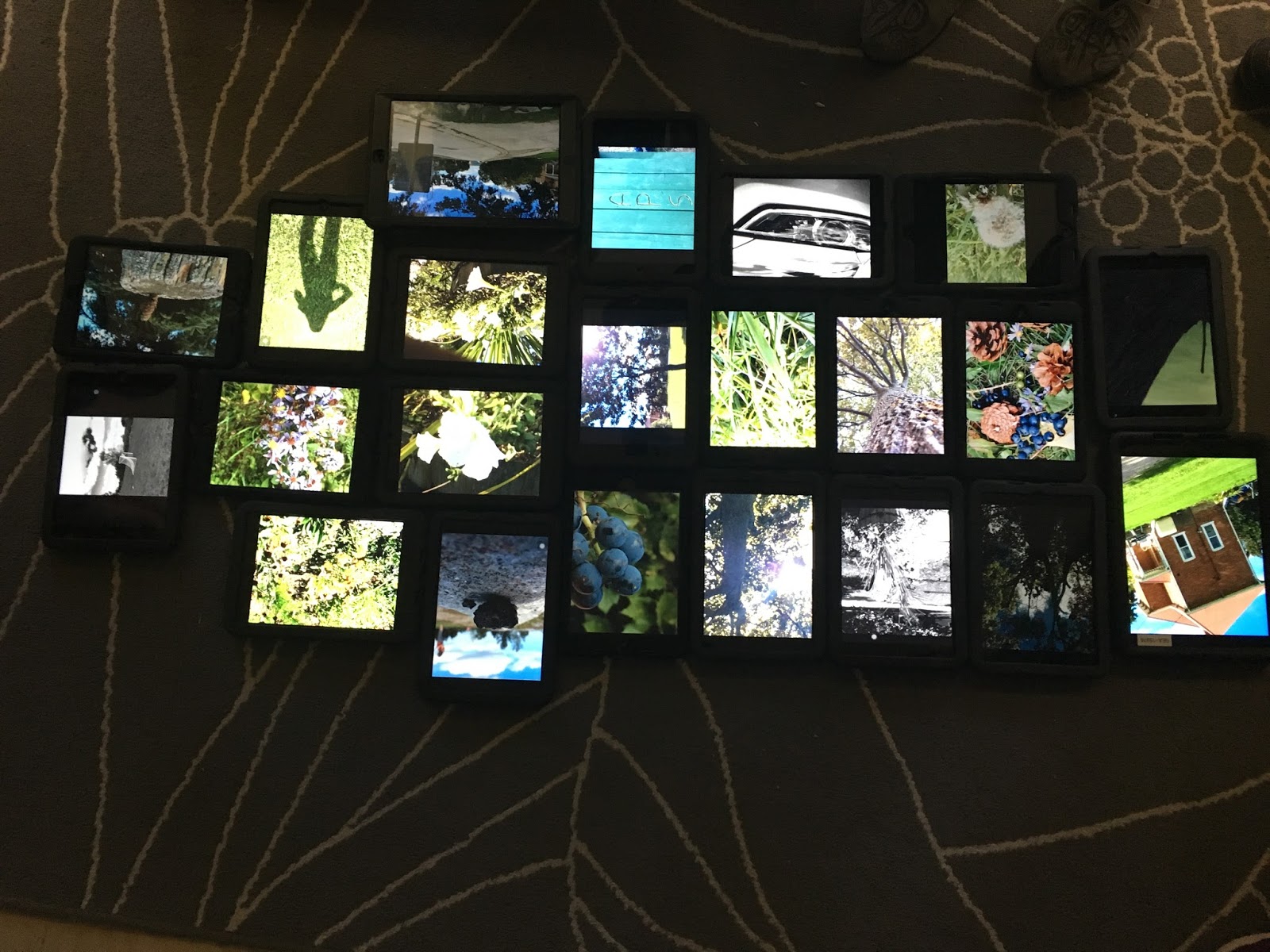
What students see in life is very different than an adult's perspective.  To help students share their creativity through photograpy I invited Linda Roy, the owner and talented operator of Ireva Photography based in Wikwemkoong, to provide students with a workshop featuring the use of the iPad as a digital camera.  


Linda Roy, Owner and Operator of Ireva Photography

 Linda Roy shared her knowledge of compostion.  Students were given tips regarding the rule of thirds, balancing elements, leading lines, symmetry and patterns, viewpoint, background, depth, framing, and getting close up.  Her most important tip was to experiment with their composition.  Students had an opportunity for hands-on practice with guidance from Linda.  


Students share their favourite photos.


Fall Harvest

Fall is the season when the Anishinabek traditionally prepared for the long winter ahead.  A wide variety of techniques have been used and shared from one generation to the next.  The 7th Annual Fall Harvest hosted by Kenjgewin Teg provided an excellent opportunity for students to begin to develop an understanding of Anishnabek culture and traditions.  

At the Fall Harvest students learned about:

  • harvesting wild game
  • trapping bits and tips
  • preserving fruits and vegetables
  • fish harvesting
  • jams and jellies
  • male and female drumming
  • apple harvesting
  • traditional teachings with Elders and/or community members


Most students agreed that the best part of the day was the traditional food samples!


Tuesday, 30 August 2016

Ready, Set, Go!


I wanted to create a classroom that would provide students with a choice in what kind of learning space works best for them.  I also wanted them to be able to work collaboratively, communicate, and engage in critical thinking.


Flexible Seating 

I tried to provide a variety of seating options. I have used chairs, yoga mats, pillows, exercise balls, stools, and a carpet.

Teacher Station

I noticed that my teacher desk took up a lot of space in the classroom.  Therefore, I removed my desk and set up a teacher workspace in the back corner of the classroom.  It allowed me to move the furniture around and provided more space for students to work.

Flexible Tables

The tables in my classrom are big, round or rectangular, to encourage collaborative work.  They also come in different heights - some allow students to stand, others are traditional height, and some are low to the floor.

It is likely that the classroom space will evolve as I get to know the students and their individual learning needs.